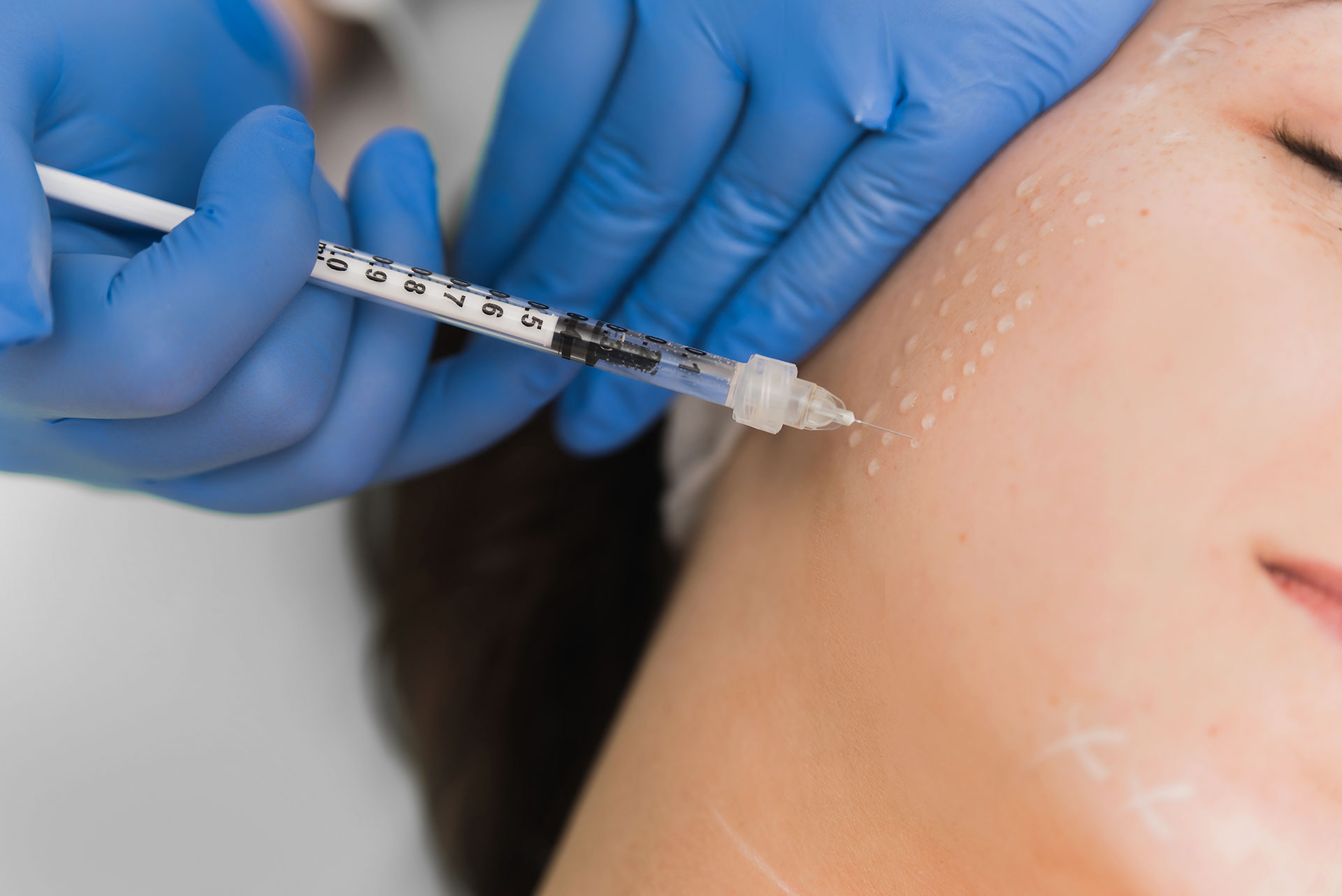
Mesotherapy is an umbrella term for superficial or intradermal injection techniques rather than one standardized treatment or formula.
The injected substance may differ widely between protocols, and evidence, expected benefit and risk therefore depend on the exact agent, indication, concentration and injection technique.
Mesotherapy is a minimally invasive treatment that uses micro-injections to deliver active ingredients into targeted areas. It is commonly used for skin rejuvenation and hair mesotherapy protocols.
The content of the injections may include vitamins, amino acids, antioxidants and other supportive components depending on the treatment goal.
What Is Mesotherapy?
Mesotherapy describes a method of placing small amounts of selected substances into superficial tissue through multiple injections. The term does not define what is injected, and formulations may include very different drugs or compounds depending on the indication and local practice.
How Does Mesotherapy Work?
There is no single mechanism for mesotherapy because the biological effect depends primarily on what is injected. An intradermal hyaluronic-acid product, a vitamin-containing mixture and a prescription drug used in the scalp should not be expected to have the same mechanism, evidence or safety profile.
- The injection technique creates local needle trauma.
- The injected substance may have its own pharmacologic or hydrating effect.
- Depth, concentration and treatment interval can change both effect and risk.
- Claims such as improved circulation or follicle stimulation should be tied to a specific agent rather than to mesotherapy as a whole.
Mesotherapy for Skin Rejuvenation
Mesotherapy is used in aesthetic practice for skin-quality concerns, but the evidence is mixed and highly protocol-dependent. Studies have used different combinations of hyaluronic acid, vitamins, amino acids and other substances, making direct comparison difficult; some clinical and histologic studies have not shown meaningful rejuvenation benefits.
For that reason, mesotherapy should not be presented as a proven treatment for facial aging, fine lines, dullness or uneven tone without identifying the exact product and the evidence for that formulation.
Hair Mesotherapy
Hair mesotherapy is also an umbrella term. Published protocols have injected very different substances into the scalp, including vitamins, peptides and prescription drugs. Results from one agent cannot be generalized to another, and study methods are heterogeneous.
Hair loss should first be diagnosed. Androgenetic alopecia, telogen effluvium, alopecia areata and scarring alopecia require different management, and mesotherapy should not delay evidence-based treatment of the underlying condition.
Who May Be Considered?
Suitability depends on the diagnosis, the exact substance being injected and the evidence for that indication. There is no generic “mesotherapy candidate.” A patient with hair thinning needs a hair-loss diagnosis first, while a patient seeking skin-quality improvement should be told which product is proposed, what evidence supports it and what alternatives exist.
Mesotherapy should not be promoted as preventive care for otherwise healthy skin or hair without a defined indication.
When Do Results Appear?
Results develop gradually depending on the treatment area. Skin improvements may appear within weeks, while hair-related results may require multiple sessions.
The number of sessions depends on individual needs and treatment goals.
Mesotherapy Safety and Risks
Mesotherapy is not one standardized procedure, so its safety profile depends on the injected substance as well as injection technique. Common injection-related effects can include pain, bruising, swelling, redness and temporary tenderness.
Other risks can include infection, allergic or inflammatory reactions, persistent nodules or granulomas, pigment change and scarring. Drug-specific adverse effects are also possible when prescription medicines or compounded mixtures are injected. Sterile preparation, clear documentation of every ingredient and review of the product’s regulatory status are therefore important.
A vague description such as “vitamin cocktail” is not enough for informed treatment planning; patients should know what is being injected and why.
Mesotherapy in Izmir
If you are considering mesotherapy izmir, treatment should be planned according to your skin type, hair condition and expectations.
A personalized approach helps determine the most suitable protocol for skin or hair revitalization.
What Affects Mesotherapy Cost in Izmir?
Mesotherapy is an injection technique rather than one standardized product, so cost depends on what is actually being injected and for which indication. Facial skin, neck, hand and scalp protocols may use different formulations, product quantities and session schedules.
The exact product or formulation, amount used, treatment area, injection technique, number of sessions, comfort measures and follow-up needs can all affect the overall treatment scope. Comparing a single “mesotherapy price” without knowing the injected substance and protocol may therefore be misleading.
Personal cost information is provided after the indication, exact product or formulation, treatment area and session plan are defined.
Mesotherapy is a technique category, not a single product
Mesotherapy refers to multiple microinjection approaches using different formulations. Hair mesotherapy and facial mesotherapy may contain different ingredients and target different problems, and protocols are not standardized across products.
Product identity, indication, evidence, alternatives and expected benefit should be discussed rather than assuming that all “mesotherapy” injections have the same effect.
Frequently Asked Questions
Is mesotherapy painful?
The procedure is generally well tolerated. Comfort measures may be used if needed.
How many sessions are required?
The number of sessions depends on the condition being treated.
Does mesotherapy work for hair loss?
It may support hair health in suitable patients, but effectiveness depends on the cause of hair loss.
Is there downtime?
Visible downtime depends on the injected formulation, treatment area and individual response; redness, tenderness, swelling or bruising can occur. Mild redness may occur temporarily.
Can mesotherapy be combined with PRP?
Sometimes, but there should be a clear indication for each procedure. Combining two injectable treatments does not automatically improve outcomes, and evidence should be considered for the specific diagnosis and protocol.
This page is an educational guide. Mesotherapy should be discussed using the exact injected product, indication and evidence rather than the procedure name alone.