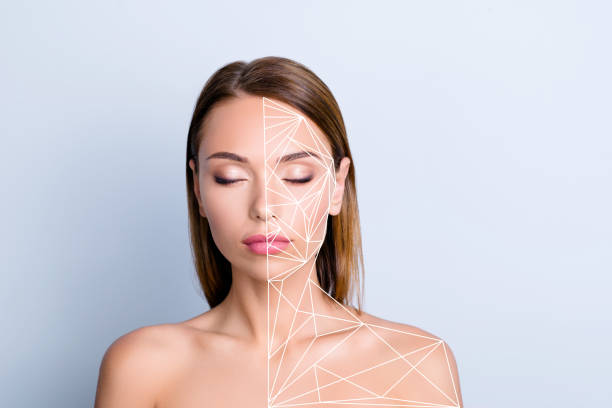
Unlike treatments chosen mainly for immediate hyaluronic-acid volume replacement, biostimulatory approaches are often selected when gradual tissue remodeling is part of the treatment goal. Some products also provide an immediate carrier-gel or structural effect, while the collagen-related component develops over time.
The aim should be individualized improvement in contour or tissue quality rather than a promise of permanent rejuvenation. Product choice, treatment area, dilution or preparation, injection plane and patient anatomy all influence the expected result and risk profile.
What Are Biostimulatory Fillers?
Biostimulatory fillers are injectable materials that stimulate the body’s own collagen production while providing structural support. Unlike purely volumizing fillers, they work by activating fibroblasts, the cells responsible for producing collagen.
One of the commonly used substances in this category is calcium hydroxyapatite, a biocompatible material that acts as a scaffold within the skin. Over time, the body produces new collagen around this structure, leading to gradual improvement in skin firmness and texture.
These fillers are often considered part of a broader aesthetic dermatology approach, where skin quality and structural support are addressed together.
How Do Biostimulatory Fillers Work?
The mechanism of biostimulatory fillers is different from traditional hyaluronic acid fillers. While hyaluronic acid provides immediate volume, biostimulatory fillers work in two stages:
- Initial support and mild volumizing effect
- Gradual collagen production over time
After injection, the product acts as a framework that stimulates collagen formation. This process continues over weeks to months, resulting in improved skin density, elasticity and firmness.
This is why results appear more gradually compared to traditional fillers, but may provide longer-lasting structural improvement.
Who Is a Good Candidate for Biostimulatory Fillers?
Biostimulatory fillers are suitable for patients who want long-term skin improvement rather than immediate, noticeable volume change. They are often preferred in early to moderate aging signs where collagen loss is a key factor.
Biostimulatory fillers may be suitable for people who have:
- Loss of skin elasticity
- Early to moderate volume loss
- Skin thinning or reduced firmness
- A desire for gradual, natural-looking improvement
- A preference for collagen-based rejuvenation
They may not be ideal for patients who need immediate, high-volume correction. In such cases, traditional dermal fillers or combined approaches may be more appropriate.
Benefits of Biostimulatory Fillers
Biostimulatory fillers provide both structural and biological benefits. By stimulating collagen production, they help improve skin quality beyond simple volume replacement.
Potential benefits may include:
- Support of new collagen formation with selected products
- Gradual improvement in tissue firmness or structure
- Subtle structural support or contour change, depending on the formulation
- Progressive results that can be assessed over weeks to months
The degree and duration of improvement vary by product, treatment area, technique and individual response. A gradual onset does not automatically mean that a result will be longer-lasting or more natural than every hyaluronic-acid filler treatment.
Biostimulatory Fillers vs Traditional Fillers
Understanding the difference between biostimulatory fillers and traditional fillers is important when choosing the right treatment.
Traditional Fillers:
- Provide immediate volume
- Mainly based on hyaluronic acid
- Used for contouring and shaping
Biostimulatory Fillers:
- Stimulate collagen production
- Provide gradual improvement
- Focus on skin quality and structure
In many cases, the two approaches are combined to achieve both immediate and long-term results.
Common Treatment Areas
Treatment areas depend on the specific product, its regulatory labeling, formulation and the physician’s technique. Depending on those factors, selected biostimulatory products may be considered for areas such as the cheeks or midface, lower face, jawline or the back of the hands. Some other uses discussed in aesthetic practice may be off-label or not appropriate for a particular product, so the treatment area should never be generalized across the entire category.
In some patients, they are combined with cheek fillers or jawline fillers to improve both structure and contour.
Treatment Process
1. Consultation and Assessment
The treatment begins with a detailed evaluation of skin quality, facial structure and aging patterns. The aim is to determine whether collagen stimulation is the primary need.
2. Treatment Planning
The amount and placement of product are planned individually. A gradual approach is often preferred to allow controlled collagen stimulation.
3. Application
The product is injected into targeted areas to provide initial support and stimulate collagen production. The technique depends on the treatment area and goals.
4. Follow-Up
Because results develop over time, follow-up visits may be recommended to evaluate progress and determine if additional sessions are needed.
Recovery After Biostimulatory Fillers
Recovery is usually mild, but temporary swelling, redness or tenderness may occur. These effects are typically short-lived and vary between individuals.
Patients are usually advised to avoid intense physical activity, heat exposure and pressure on the treated area for a short period after the procedure.
Because collagen stimulation is a gradual process, visible improvement continues over time rather than appearing immediately.
When Are Results Seen?
Initial changes may be subtle, but collagen production continues over several weeks to months. This gradual improvement is one of the defining characteristics of biostimulatory fillers.
The final result depends on individual factors such as age, metabolism, skin condition and treatment plan. Maintenance schedules should be personalized.
Can Biostimulatory Fillers Be Combined With Other Treatments?
Yes. Biostimulatory fillers are often combined with other aesthetic treatments to achieve more comprehensive results.
- Botox for dynamic wrinkles
- dermal fillers for contouring
- skin boosters for hydration
- laser treatments for skin texture
This combination approach allows both immediate improvement and long-term skin regeneration.
Biostimulatory Fillers in Izmir
Patients searching for biostimulatory filler Izmir are often interested in treatments that go beyond simple volume correction. The focus is on long-term skin quality, collagen support and natural rejuvenation.
An individualized dermatological approach ensures that the treatment plan is based on skin needs, facial structure and realistic expectations.
Safety Considerations
Biostimulatory fillers are medical injectable treatments and should be planned with the same attention to anatomy and vascular safety as other dermal fillers. Common short-term effects can include swelling, bruising, tenderness and temporary asymmetry. Delayed inflammatory reactions, nodules or granulomas can also occur.
A rare but serious complication of injectable fillers is unintended intravascular injection or vascular occlusion. Depending on the site, this can cause tissue ischemia or necrosis and, in facial injections, has been associated with visual impairment, blindness or stroke. Non-hyaluronic-acid materials also cannot simply be dissolved with hyaluronidase in the same way as many HA fillers.
Risk depends on the specific product, treatment area, injection plane, technique and patient factors. Careful product selection, conservative planning and prompt assessment of unusual pain, blanching, visual symptoms or neurologic symptoms are important.
Biostimulatory Filler Cost in Izmir: What Affects the Price?
Biostimulatory filler cost cannot be reduced to one standard syringe price because products in this category differ in material, preparation, approved indications and treatment protocols.
- Exact product or material: calcium hydroxyapatite (CaHA), poly-L-lactic acid (PLLA) and other biostimulatory products are not interchangeable.
- Treatment area: the anatomical region, tissue thickness and product-specific labeling influence how treatment is planned.
- Dose and preparation: product amount, dilution or preparation method and injection plane can differ according to the intended effect.
- Number of sessions: some protocols are staged over more than one session, depending on the product and treatment goal.
- Clinical objective: structural support, gradual collagen stimulation or a combined goal may require different treatment scope.
- Follow-up: delayed tissue response, nodules or inflammatory reactions may require reassessment and should be considered part of medical treatment planning.
A meaningful price comparison should therefore identify the exact product, treatment area, preparation, dose and expected session plan. Non-hyaluronic-acid materials also cannot simply be dissolved with hyaluronidase in the same way as many HA fillers.
Biostimulatory fillers and hyaluronic-acid fillers have different primary goals
Biostimulatory products such as CaHA- or PLLA-based treatments are used for product-specific tissue-support and collagen-stimulation goals. HA fillers primarily provide gel-based volume and contour. They are not automatically interchangeable, and treatment area, reversibility and timing of results should be considered separately.
Frequently Asked Questions
What are biostimulatory fillers?
Biostimulatory fillers are injectable treatments that stimulate collagen production while providing structural support to the skin.
How are they different from regular fillers?
Regular fillers provide immediate volume, while biostimulatory fillers work gradually by stimulating collagen production.
When will I see results?
Results develop gradually over weeks to months as collagen production increases.
Are biostimulatory fillers safe?
They have both common injection-related risks and less common but potentially serious complications. Safety depends on the exact product, treatment area, anatomy, injection technique and patient factors; vascular occlusion, delayed nodules and inflammatory reactions must be considered.
How long do results last?
Duration cannot be generalized across the category. It varies with the material used, treatment area, dose or preparation, number of sessions and individual tissue response.
Can they be combined with other treatments?
Yes, they are often combined with Botox, fillers, lasers and skin boosters for comprehensive results.
Are results natural-looking?
A natural appearance depends on indication, product choice, dose, placement and conservative treatment planning. A gradual mechanism by itself does not guarantee a natural result.
Do I need multiple sessions?
Some patients may benefit from multiple sessions depending on their skin condition and treatment goals.
Is there downtime?
Visible recovery varies with the product, treatment area, injection technique and individual response, with mild and temporary side effects.
Who is the ideal candidate?
Patients with early to moderate signs of aging and collagen loss are typically good candidates.
Long-Term Skin Rejuvenation Approach
Biostimulatory fillers can be part of a broader strategy for structural support and gradual collagen-related tissue change, but they are not interchangeable with every volumizing filler and they do not suit every treatment area or patient.
This page is an educational guide. Individual suitability, product choice and treatment planning should be decided after medical assessment. For Dr. Orhan Demirer’s official clinical information and appointment details, visit the main clinical website.